November 12, 2026 · 7 min read · By Goddard Building & Remodeling
What to Expect When You Live in Your Home During a Remodel
Staying home during construction is possible, and plenty of families do it. Preparation is what separates a manageable remodel from a miserable one.
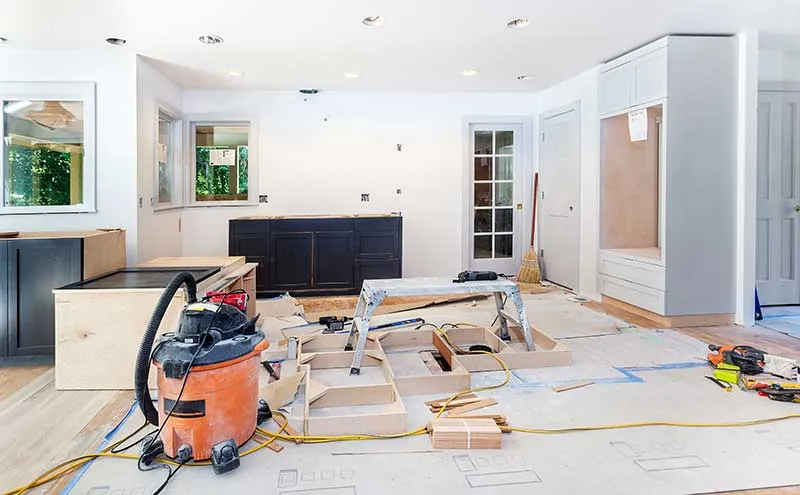
Can you really stay home during a remodel?
For most single-room projects, yes. Families regularly live in their homes while a kitchen, a bathroom or a closet is rebuilt. For larger projects, such as a whole-house renovation or an addition that connects into the existing structure, the answer is more nuanced. Some households stay through all of it. Others move out for a few weeks during the heaviest stretch.
The deciding factors are the scope of the work, the size of your household and how much disruption you can tolerate. A couple who works away from home all day may be comfortable with a long project. A family with young children, a person with health concerns or someone who works from home may find the same project very hard. There is no right answer, only the one that fits your household.
What matters is deciding with clear information. Before work begins, we talk through what the project will involve, which rooms will be out of use and for how long, and what the likely noise and dust will be. That conversation is the foundation of everything that follows.
The three things that actually bother people
When families describe the hardest part of living through a remodel, the same three themes come up.
Dust
Demolition and sanding make dust, and dust travels. Good containment helps a great deal. Plastic barriers, sealed doorways, floor protection and air filtration reduce how much spreads, and a tidy end-of-day cleanup keeps the rest of the house livable. No remodel is completely dust free, but a well-run one keeps it manageable.
Noise
Demolition, framing and tile cutting are loud. The noisiest days tend to be at the start and are limited in number. If you work from home or have a baby who naps, tell your contractor early. Work hours can sometimes be adjusted, and loud tasks can be scheduled for times when the house is empty.
Loss of a key room
A kitchen or a bathroom out of service changes daily routines more than anything else. This is the part you can prepare for the most, and the sections below cover how.
Setting up a temporary kitchen
If your kitchen is being remodeled, the weeks without it are the biggest adjustment. A little planning makes a big difference. Pick a spot away from the work zone, such as a dining room, laundry room or garage corner, and set up a basic station.
- A microwave, a toaster oven or an electric skillet for simple meals
- A small refrigerator, or space in a garage refrigerator, for essentials
- A folding table or cart for prep and a tub for dishes
- Paper or reusable plates and utensils so you are not washing dishes in a bathroom sink
- A cooler for overflow, if you have a freezer that will be out of service
- A short list of easy meals that need little prep, and a few favorite takeout places
Many households find the experience easier than they feared, especially if the kitchen is being rebuilt in stages. Our kitchen remodeling page describes how we sequence that work so the time without a kitchen is as short as the project allows.
Bathrooms, bedrooms and everything else
If you have a second bathroom, a bathroom remodel is easy to live through. If it is your only one, talk to your contractor about the plan. Some families arrange to use a neighbor's or a relative's bathroom for a short window. Others rely on a gym membership for showers. A few arrange for a temporary portable unit. The most disruptive part is usually the demolition and the days when plumbing is disconnected, and a good schedule keeps that time short.
Bedrooms and living spaces are rarely taken out of service, but they do get dusty and noisy. Move valuables and fragile items out of the work area and the rooms around it. Cover remaining furniture. Keep doors closed, and consider a small air purifier in the room where you sleep. If anyone in your household has allergies or asthma, mention it up front so the contractor can plan extra containment.
Our bathroom remodeling page has a bit more on how we sequence bathroom work so the room is back in service as soon as possible.
Pets, kids and safety
A work site is not a place for curious kids or pets. Tools, open walls, exposed nails and open doors create hazards, and workers coming in and out can let animals escape. Decide in advance how to handle this. Some families board pets or arrange for them to stay elsewhere during the worst days. Others designate a safe room for them. For children, set clear rules about which areas are off limits and make sure they understand why.
Tell your contractor about any hazards in your household, such as a dog that does not like strangers, a child with allergies or a medical device that needs power. These details change how the crew sets up and works each day.
Communication makes the biggest difference
More than any trick or product, the thing that makes living through a remodel bearable is knowing what is happening. Ask for a schedule and for regular updates. Know who your contact is and how to reach them. Agree on work hours and what time the crew arrives each day. Ask what to expect over the coming week, especially before a noisy or disruptive stage begins.
It also helps to set expectations about your own role. Decisions on tile, paint and fixtures should be made before they are needed, so the crew never has to wait. Clear a path for the work area before each day. If something is bothering you, say so early. Small issues are easy to fix, and they become big ones when they are left alone.
Our process page explains how we communicate at each stage, from the first consultation to the final walkthrough.
When it makes sense to move out
Some projects are simply easier if you are not in the house. If the work involves removing most of the floors, replacing utilities across the home or opening large portions of the structure, a temporary move may be the better path. The same applies if you have a newborn, a serious health issue or a job that demands quiet at home.
Moving out has costs of its own, and it is a significant decision. If you are unsure, we can talk through the scope and timeline and give you an honest view of how livable the house will be at each stage. Many families choose a hybrid. They stay for the early phases and leave for a short period when the work is at its most intense.